

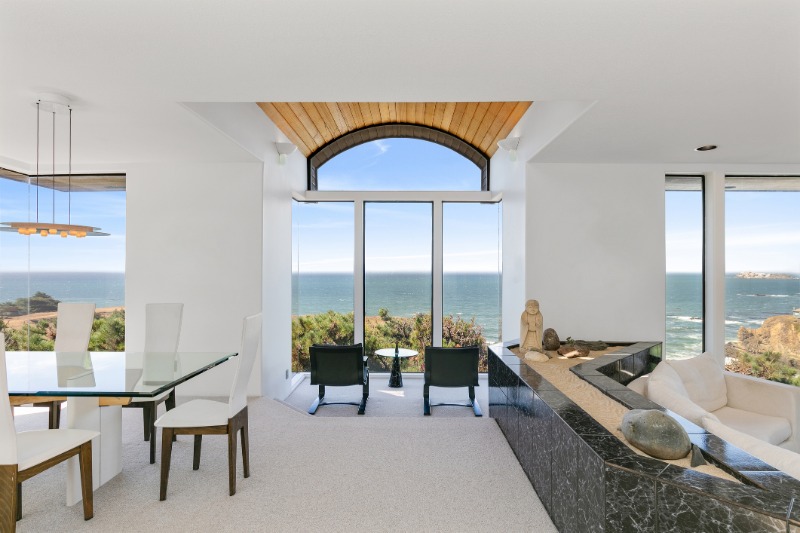
A bright, beautifully presented coastal interior that shows how the right furnishings can frame the view and help buyers picture the lifestyle.
When sellers ask me for home selling tips, this is one of the questions that comes up again and again: should the house be empty, professionally staged, or sold with furniture in place? After years of walking through homes with buyers in Orange County, I can tell you there is no automatic answer. I look at the architecture, the condition, the price point, the buyer likely to respond, and how the home actually feels in person.
What matters most is how the house reads the moment someone walks in. Buyers are making decisions quickly. They notice light, scale, flow, and whether the home feels cared for. The presentation shapes all of that.
Selling empty
An empty home can feel clean, fresh, and easy to show. It also gives buyers a blank canvas, which some people appreciate. From a practical standpoint, vacant homes are often easier to photograph, easier to access for showings, and easier to keep in showing condition.
I have also seen empty homes feel flatter than sellers expect. Rooms can read smaller. Buyers can struggle with scale. A living room that looks generous on paper can feel uncertain in person when there is nothing grounding it. In higher-end homes especially, empty rooms can sometimes make the property feel unfinished.
Selling staged
If I had to choose the strongest option in most cases, it would usually be staged. Staging gives buyers context. It defines each room, highlights the architecture, and creates a polished, aspirational feeling that tends to photograph beautifully online.
This matters because buyers usually meet your home on a screen before they ever walk through the front door. If the home looks warm, intentional, and move-in ready, you are far more likely to generate interest.
There is also solid data behind it. According to the National Association of Realtors’ 2025 Profile of Home Staging, 29% of real estate agents said staging increased the dollar value offered by 1% to 10%, and 30% of sellers’ agents said staging reduced time on market.
Professional staging also helps remove distractions. The furniture is scaled correctly, the palette is cohesive, and the home feels curated instead of personal. That balance is often where the magic happens.
Selling furnished
Selling furnished can make sense, but only when the furniture genuinely helps the home. I see this work best when the pieces suit the architecture, feel current, and support the lifestyle the buyer is already looking for. That can be especially appealing for a second-home buyer, someone relocating, or a buyer who wants a more turnkey move.
Still, furnished and well-presented are not always the same thing. If the furniture is bulky, dated, overly specific, or sentimental, it can make the house harder to read. It can also create extra points of negotiation, since furniture is personal property and needs to be addressed separately in the contract.
So what is best?
In most cases, I recommend staged over empty, and staged over furnished. A staged home usually gives you the broadest appeal and the strongest presentation. Empty can work when the home has strong bones and staging is not practical. Furnished can work when the house and the furnishings are a natural fit.
What I want for my sellers is simple: a presentation that makes the home feel easy to understand and easy to want. That is usually what leads to stronger interest and a better result.
FAQs: Selling a home in Orange County
|
Let’s talk selling strategy
If you are wondering whether your home will show best empty, staged, or furnished, I would love to help you make the right call. The right presentation can shape the entire sale, from first impressions to final offer. Call me, Robyn Robinson at 949.295.5676, or send an email to talk through the strategy that fits your home best.